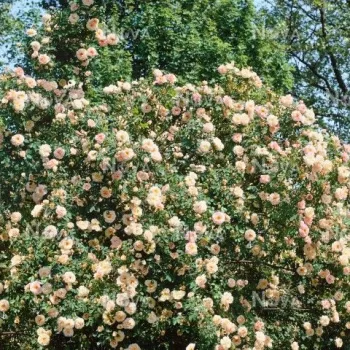
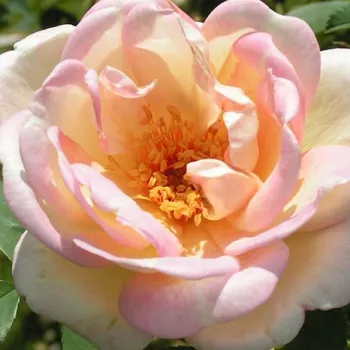
FRÜHLINGSDUFT – cream-yellow wild rose – Kordes
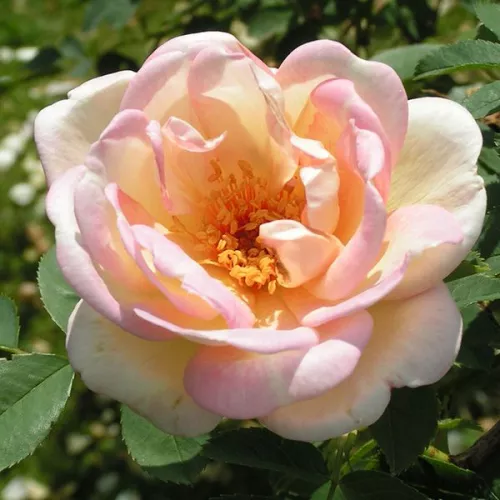
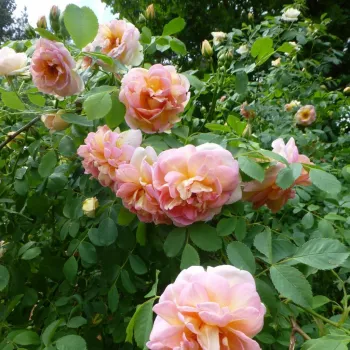
Step outside to meet Frühlingsduft and You are greeted by a wave of fragrance that instantly suggests blossom-filled spring mornings, even on a soft grey Irish day. This tall, arching shrub carries clusters of XL blooms whose shifting cream, butter-yellow and blush-pink petals glow especially beautifully in green, soft light. Its once-a-year main flowering is truly spectacular, creating a cottage-style focal point that suits both rural borders and Dublin terrace fronts. Own-root planting means long-lived stability, steady regeneration after pruning and storms, and fewer replacement worries over the years. In heavy soils it appreciates simple drainage care – a loosened, mulched planting hole helps it cope with persistent Atlantic rain and damp conditions. With medium maintenance needs and good winter hardiness, it settles in reliably, building roots in year one, strong framework in year two and its full romantic presence by year three.
Usage options
| Target area | Reasoning |
|---|
| Standalone feature shrub in a family lawn |
Frühlingsduft’s tall, arching frame and once-a-year flowering burst make a dramatic focal point that reads beautifully from kitchen windows and patios, ideal where one impressive shrub can carry the scene for cottage-style gardeners and beginners. |
| Fragrant walkway or path edge |
The very strong, room-filling scent is released as You pass, so planting along a front path or through a side passage turns a short walk in light rain into a wonderfully scented experience for fragrance-loving urban homeowners. |
| Cottage border with mixed perennials |
Its large, pastel, cream-yellow flowers blend easily with peonies, lady’s mantle and feverfew, giving that “girly” cottage softness while the shrub’s robust frame provides structure for nature-oriented family garden owners. |
| Lightly shaded boundary or north-west aspect |
Suitable for partial shade, this shrub keeps good foliage and generous flowering where many roses sulk, making use of less-than-perfect Irish light for busy, space-conscious garden planners. |
| Soft screening hedge along a fence |
With dense, matt mid-green foliage and a bushy, arching habit, Frühlingsduft knits into a breathable, semi-formal hedge that offers privacy and seasonal fragrance for practical-minded family garden users. |
| Training on pergolas or low walls |
The long, flexible, thorny shoots can be tied to an arch, pergola or wall wires, giving height, romance and scented clusters above head level while leaving ground space free for compact gardens and small-plot gardeners. |
| Relaxed, low-input wildlife-friendly corner |
Moderate disease resistance and good winter hardiness support a breathable garden concept with reduced chemical use, appealing to eco-aware families who prefer resilient plants and wildlife-friendly buyers. |
| Long-term, own-root specimen for future-proof planting |
As an own-root shrub, it ages slowly and regenerates well after pruning or storm damage, building roots first, then framework, then full ornamental value, which suits patient, long-view garden planners. |
Styling ideas
- Cottage-Arch – Train Frühlingsduft over a simple timber arch with foxgloves and feverfew at the base – ideal for romantic cottage-garden enthusiasts.
- Blush-Border – Pair it with pale pink peonies, lady’s mantle and soft grasses to echo its cream and blush tones – perfect for lovers of gentle, feminine colour schemes.
- Fragrant-Front – Place near a Dublin terrace gate or front door so the strong scent greets visitors – suited to urban homeowners wanting maximum effect from minimal planting.
- Pastel-Hedge – Use several shrubs at hedge spacing, underplant with hardy geraniums for a loose, scented screen – great for families seeking privacy without harsh fencing.
- Shady-Nook – Tuck it into a bright but not hot corner with ferns and hostas, letting its flowers light up the shade – attractive for gardeners making the most of awkward spots.
Technical cultivar profile
| Property | Data |
|---|
| Name and registration |
Frühlingsduft is a botanical shrub rose (Hybrid Spinosissima, wild-type character) sold as a consumer garden rose; an unregistered cultivar grown on its own roots for long-term garden use. |
| Origin and breeding |
Bred by Wilhelm J. H. Kordes II in Germany from ‘Joanna Hill’ × Rosa pimpinellifolia; introduced by W. Kordes’ Söhne in 1949 and now appreciated as a classic, vigorous shrub for gardens. |
| Growth and structural characteristics |
Strong, bushy, arching shrub reaching about 1.8–2.7 m high and 1.3–2 m wide, with dense, matt mid-green foliage and many thorns; framework lends itself to specimen use, hedging or light training. |
| Flower morphology |
Very large, flat, double flowers with roughly 26–39 petals, carried in clusters; non-remontant, delivering one main abundant flush per season, with moderate self-cleaning of spent blooms. |
| Colour data and phenology |
Closed buds are pale lemon-yellow; flowers open cream-yellow with butter-yellow centres and pink flush, then fade towards cream-white with delicate pink edging and a persistent soft yellow heart. |
| Fragrance and aroma |
Very strong, room-filling scent with a classic rosy character recalling “spring fragrance”; best enjoyed near paths, seating and entrances where air movement can waft the perfume towards people. |
| Hip characteristics |
Rose hips are usually absent; when present they are small, spherical, 9–15 mm across and green, generally failing to ripen fully, so they add little visual or wildlife interest compared with the flowers. |
| Resistance and winter hardiness |
Hardy to about −29 to −26 °C (RHS H7, USDA 5a, Swedish Zone 4) with good heat and drought tolerance if watered in long dry spells; moderate resistance to mildew and black spot, resistant to rust. |
| Horticultural recommendations |
Use as a specimen, hedge, park shrub, or lightly trained on walls and pergolas; allow 1.3–2.1 m spacing, mulch clay soils for drainage, water in drought, and consider a 40–50 litre minimum container. |
FRÜHLINGSDUFT offers towering spring fragrance, romantic pastel flowers and durable own-root growth, making it a thoughtful choice for gardeners seeking a long-lived, low-fuss feature rose.