ZENTA – burgundy dwarf mini rose - Márk
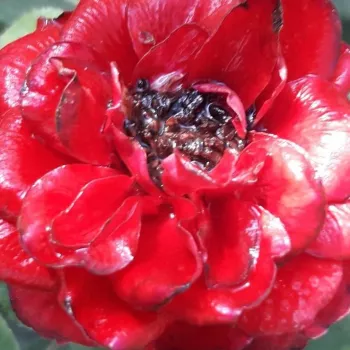
If you dream of a compact rose that fits a small Irish front garden or balcony, Zenta offers rich colour and easy enjoyment in a truly dwarf form. Its velvety burgundy blooms appear in generous clusters all summer, repeating reliably even when our summers are short and cool with frequent rain and soft light. The bush stays neat and compact, making edging and container displays look beautifully finished with very little effort. Planted on its own roots, it establishes steadily for long-term beauty and simple care; think of year one for roots, year two for structure, and year three for full garden presence. In a cottage-style border or a tidy terrace pot, this unfussy mini rose brings cheerful contentment to everyday garden moments.
Usage options
| Target area |
Reasoning |
| Balcony boxes and rail planters |
The naturally compact, bushy habit and 35–45 cm height keep Zenta tidy in narrow balcony boxes without flopping. Regular repeat flowering gives season-long colour with only basic watering and feeding, ideal for busy urban gardeners. |
| Containers and large patio pots |
Zenta’s dwarf size and dense foliage work beautifully in a single decorative pot or mixed container. Use a 40–50 litre container with free-draining compost so the plant can mature steadily and give years of reliable structure for low-maintenance homeowners. |
| Front-garden edging in terraced streets |
Planted 20 cm apart, Zenta forms a low, burgundy edging that frames paths without overwhelming a small Dublin-style front garden. The strong, uniform flower colour reads well from the pavement, suiting kerb-appeal seekers. |
| Rock gardens and gravel corners |
Good group-level drought tolerance and a naturally small root zone mean Zenta can cope in rock gardens or gravel beds once established, provided initial watering is careful, which appeals to water-conscious gardeners. |
| Mini rose border in a family garden |
At 35–45 cm high with moderate disease resistance, Zenta builds a low, child-friendly rose border that looks refined but does not demand constant pruning or spraying, suiting relaxed family gardeners. |
| Formal geometric layouts and knot gardens |
The compact, uniform growth and small spread (20–30 cm) help keep lines crisp in small parterres or knot-style layouts, where many roses would grow too vigorously for design-conscious owners. |
| Long-season colour near seating areas |
Its good remontant habit gives repeated flushes of double, burgundy flowers through the main season, brightening patios and seating corners even when Irish summers feel brief, pleasing colour-loving beginners. |
| Small urban gardens with challenging weather |
Compact plants experience less wind rock and drying, and Zenta’s group-level drought and heat tolerance help it ride out mixed conditions of breezy spells and showers typical of Irish towns, reassuring climate-aware buyers. |
Styling ideas
- Cottage-Romantic – Edge a cottage-style path with Zenta and airy perennials like Calamintha ‘Elfin Purple’ for a soft, feminine look – ideal for lovers of traditional Irish cottage gardens
- Balcony-Jewel – Combine Zenta in a large pot with trailing ivy and silver foliage for an easy, jewel-toned balcony focal point – perfect for apartment dwellers with limited space
- Terraced-Chic – Line a small front garden with repeating Zenta plants and low grasses for a tidy, modern burgundy border – suited to style-focused terraced-house owners
- Rock-Garden – Tuck Zenta among stones with drought-tolerant companions like Liatris ‘Kobold’ for a structured yet informal rockery – great for gardeners who want colour with little fuss
- Patio-Centrepiece – Plant Zenta alone in a 50-litre glazed pot by the front door for neat, long-season impact – appealing to busy homeowners who appreciate simple statement planting
Technical cultivar profile
| Aspect |
Data |
| Name and registration |
Zenta – Miniature, dwarf garden rose; trade name “Zenta Mini - dwarf rose Márk”, exhibition name “Zenta” in the miniature class for containers, edging and balcony plantings. |
| Origin and breeding |
Miniature rose bred by Márk Gergely in Hungary (2002), with unknown parentage; first introduced by PharmaRosa® Ltd., offered as an own-root, container-grown garden variety. |
| Growth and structural characteristics |
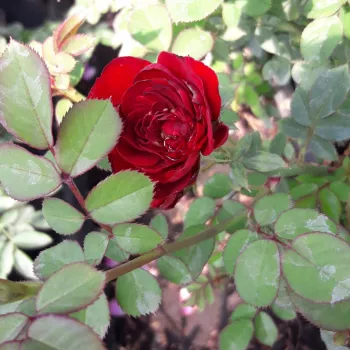
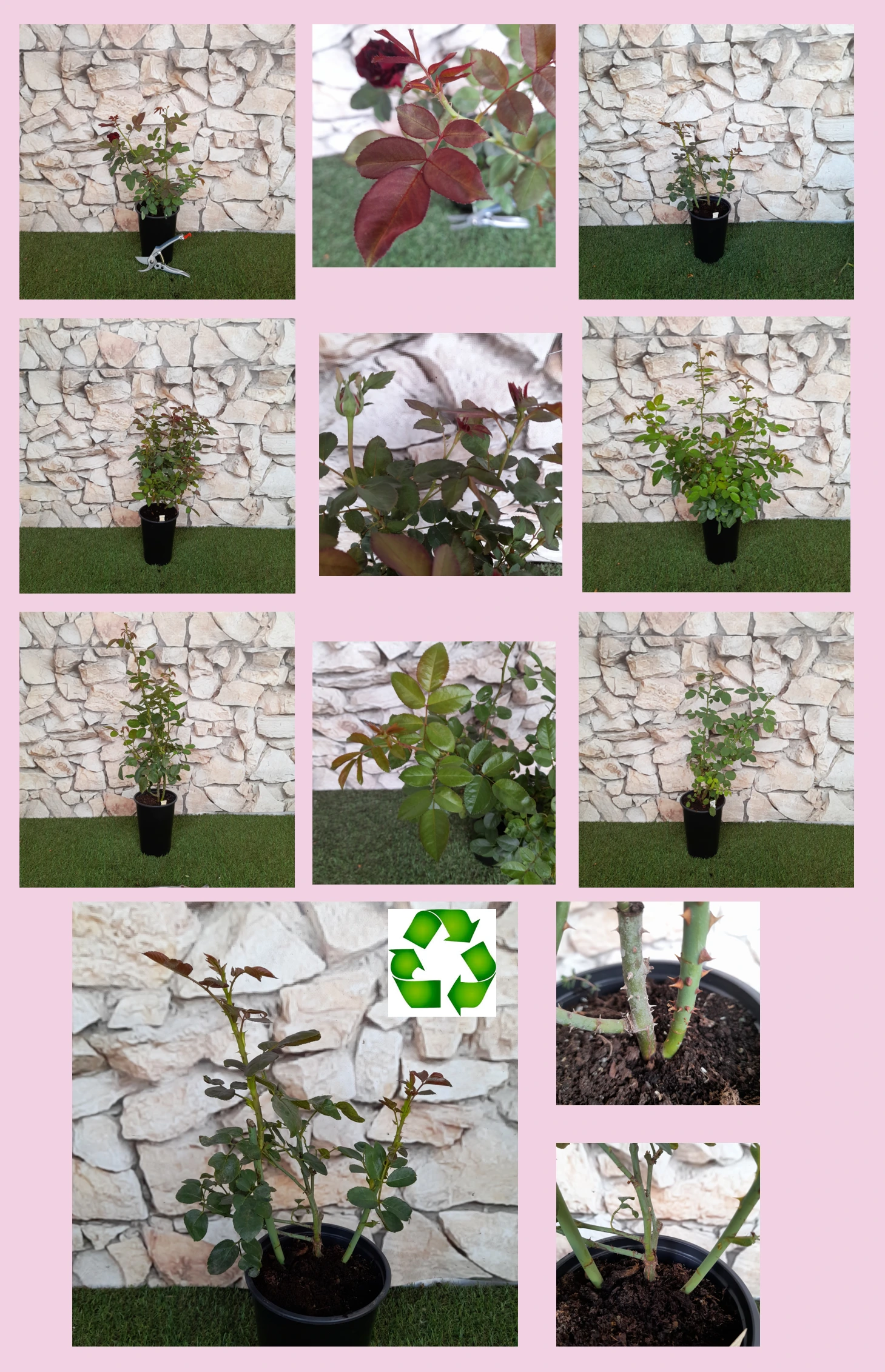
Compact, bushy dwarf shrub, 35–45 cm high with a 20–30 cm spread; dense, mid-green, slightly glossy foliage, moderately thorny shoots, suitable for tight spacing and edging work. |
| Flower morphology |
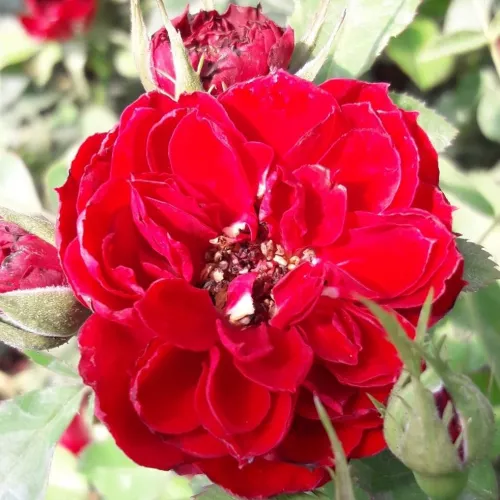
Small, double, cup-shaped blooms 1–4 cm across, bearing 26–39 petals; flowers produced in clusters of 3–10 per stem with a good repeat-flowering habit across the season. |
| Colour data and phenology |
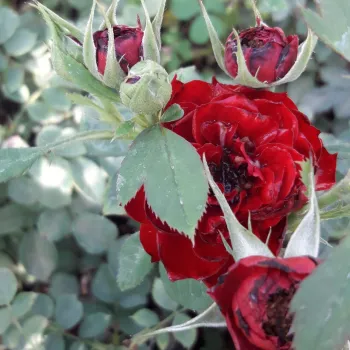
Uniform velvety dark burgundy flowers (RHS 187A–187B) with a faint purplish or lilac veil on the petal edges; colour darkens slightly before fading and generally remains stable on the plant. |
| Fragrance and aroma |
No noticeable fragrance; grown primarily for its intense, velvety burgundy colour and compact habit rather than scent, making it a visual feature in containers and small garden spaces. |
| Hip characteristics |
Rose hips form rarely; when present they are small, spherical, bright red (RHS 44A), about 5–7 mm in diameter, and of mainly ornamental rather than wildlife or culinary interest. |
| Resistance and winter hardiness |
Moderate resistance to powdery mildew, black spot and rust; heat tolerance average with good group-level drought tolerance, hardy to approximately -12 to -9 °C (H5, Swedish Zon 1, USDA 8a). |
| Horticultural recommendations |
Best in well-drained soil with added organic matter on heavy clay; spacing 20 cm in borders or 35 cm as a solitary, with 23–26 plants/m² for mass planting in beds or edging. |
Zenta – burgundy dwarf mini rose - Márk offers compact long-season colour, space-saving bushy growth and durable own-root performance, making it a thoughtful choice for modest Irish gardens and balconies.